Colorbond ridge capping: leaks, screws and replacement (2026)
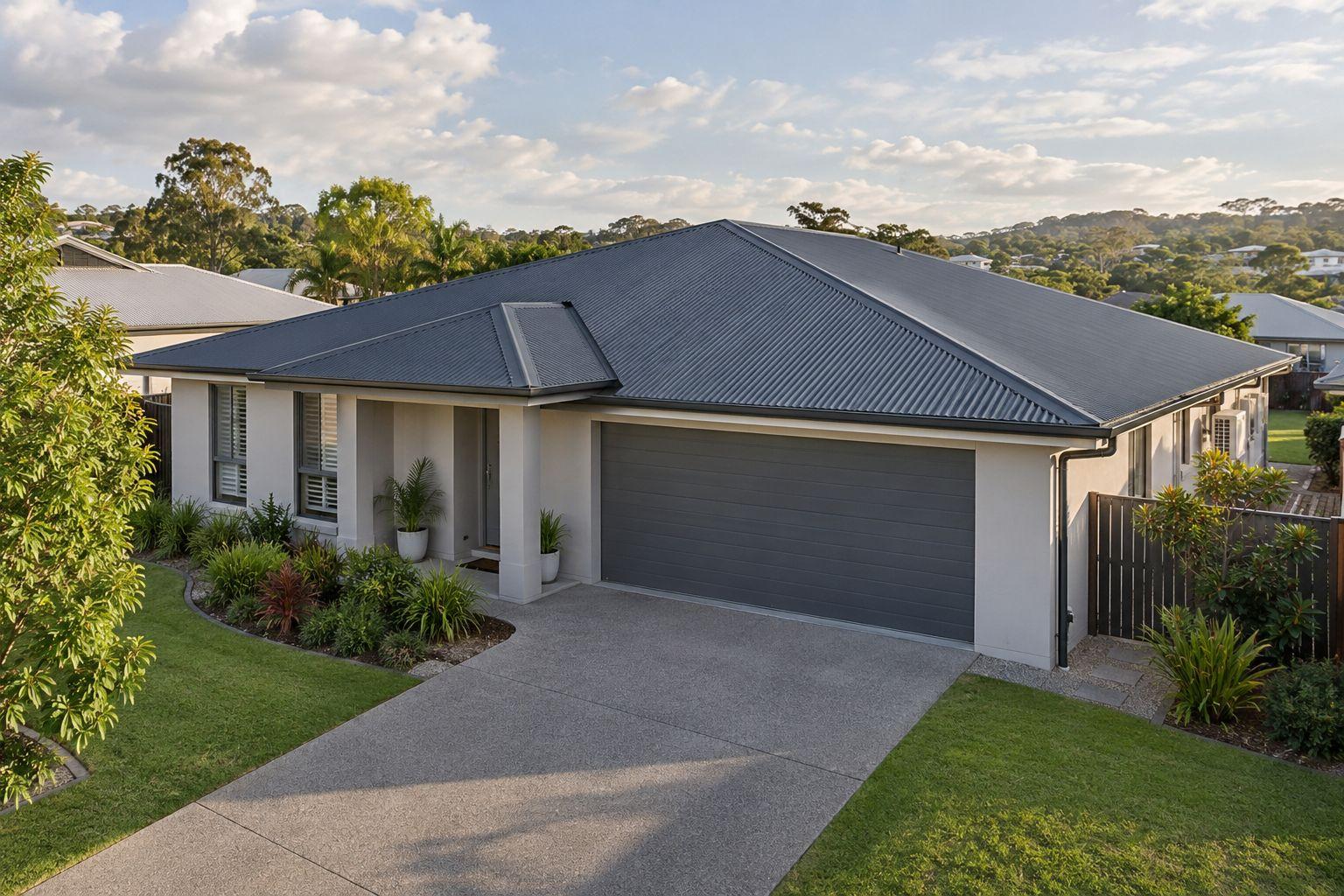
Colorbond ridge capping is the shaped metal flashing that covers the peak where roof slopes meet. A leaking ridge does not automatically need new capping: failed screws, worn washers or a faulty joint may be repairable while the metal is sound. Rust holes, badly distorted capping or an unsuitable fit need assessment for replacement.
At R&R Restorations, our metal roof work includes failed screw replacement, rust treatment, refixing lifted sheets and repairing worn flashings. We check the roof before quoting, so you know whether the problem is local or part of wider wear.
In summary
- Metal ridge capping uses fixings and weatherproof joints, not the bedding mortar and pointing used on tiled ridges.
- New screws help when the fixings have failed. They do not repair rust holes or correct poorly fitted capping.
- The roof sheets beneath the cap matter too, including their fixings and turned-up ends.
- A supply-only ridge-cap price is not an installed repair price. Ask what the quote covers before comparing totals.
What does Colorbond ridge capping do?
Colorbond ridge capping covers the opening at the roof's highest junction and sheds water onto the roof sheets. It is a flashing: a formed metal piece that weatherproofs a junction rather than covering the main roof slope.
Roll-top ridge capping has a rounded centre and is common on corrugated roofs. Flat ridge capping has a folded centre. The right choice depends on the roof pitch, sheet profile and required cover, not just which shape looks closest to the old cap.
When replacement is being considered, the specification needs to identify:
- The roofing profile, such as corrugated sheeting, TRIMDEK or KLIP-LOK.
- The cap's shape, width, angle and lengths, allowing for the joints.
- A compatible material and finish, including the colour.
- The fixing and weatherproofing detail for that roof.
A cap in the right colour can still be the wrong size or shape. That is why our roof assessment starts with material and condition rather than colour selection. If the problem is rust beyond the ridge, our guide to metal roof repairs explains when treatment is enough and when the sheets need closer assessment.
How is metal ridge capping fixed to the roof?
Metal ridge capping is mechanically fixed over the roof sheets, with the fixing pattern matched to the roofing system. Both the capping and the sheet ends need secure attachment; holding the cap to a sheet is not necessarily the same as holding that sheet to the roof structure.
The LYSAGHT Flashing Guide, checked 28 October 2026, makes that distinction. Its transverse-flashing details describe fastening to the ribs or crests of the sheets. Where the sheet fixing and support position allow it, a fixing can secure both sheet and flashing.
| Part of the ridge | What it does | Why it matters during a repair |
|---|---|---|
| Capping fixings | Hold the cap in place | A loose cap needs its attachment checked, not just its colour touched up |
| Roof-sheet fixings and supports | Secure the sheets beneath the cap | New capping screws cannot make a failed sheet connection sound |
| Capping laps | Join adjoining lengths of flashing | The overlap, fastening and seal need to work together |
| Sheet-end turn-ups | Form an upturned edge beneath the cap | They help resist water passing over the upper ends of the sheets |
| Shaped lower edges | Fit the flashing around the roof profile | Scribing or notching may be needed to suit the ribs and weatherproofing detail |
A turn-up is the upper end of a roof sheet bent upwards beneath the flashing. It is hidden once the ridge cap is fitted. A ridge can look neat from the street while the sheet-end detail underneath is wrong.
There is no single screw spacing or screw length that suits every Colorbond ridge. The profile, fixing arrangement, supports and wind requirements matter. For our repair work, the quote needs to distinguish failed screw replacement from other sheet or flashing repairs.
Why does Colorbond ridge capping leak?
A metal ridge can leak through failed fastener seals, faulty overlaps, corrosion or gaps created by movement and poor fit. Wind-driven rain can also expose problems beneath an otherwise intact-looking cap.
The visible symptom helps narrow the inspection, but it does not prove the cause.
| What you notice | Possible fault to check | Repair decision |
|---|---|---|
| Rust marks around capping screws | Corroded fixings, damaged washers or rust in the surrounding metal | Check both the fastener and the metal before replacing screws |
| Capping that rattles or lifts | Loose fixings, damaged holes or distorted capping | Establish whether a secure connection can be restored |
| Water appearing near a cap join | A faulty lap, failed seal or corrosion within the overlap | Assess the joint, not only the visible line of sealant |
| Leaks mainly during windy rain | Inadequate cover, poor fit or defective sheet-end details | Check how the ridge sheds and resists wind-driven water |
| Holes, deep pitting or torn metal | Loss of metal rather than surface staining | Assess replacement of the affected component |
On the Gold Coast and around the Tweed, salt exposure also matters. Our metal roof service identifies coastal salt air as a reason to address rust early, while more of the roof is still sound.
A ceiling stain below the ridge does not prove the ridge is leaking. Water can travel before it drips indoors. If the leak appears only during storms, record the timing and wind direction rather than climbing up to test it. Our guide to roof leaks in heavy rain covers those observations and the immediate safety steps.
Will tightening or replacing the screws stop the leak?
Replacing failed screws can stop a ridge leak when the screws or washers are the entry point and the surrounding metal remains sound. Tightening an old screw will not repair a split washer, a corroded hole or a fixing that no longer holds.
The washer seals the hole around the screw. It needs even contact, not maximum force. Overtightening can deform the sheet or damage the seal.
BlueScope's fastener selection bulletin, revised June 2026, says crest fasteners should be tightened only enough to form a weatherproof seal without damaging the sheet profile or sealing system. It also requires compatible screws and washers suited to the application and exposure.
Stainless steel is not an automatic upgrade for a coastal Colorbond roof. The same bulletin says stainless steel fasteners must not be used with Colorbond or Zincalume steel.
We replace failed and rusted screws as part of our metal roof work. Ask whether the quoted work covers selected failed fixings or a wider area. A ridge repair should not leave you guessing whether the contractor has allowed for the metal around the holes as well as the screws themselves.
When does ridge capping need replacing rather than re-screwing?
Replacement needs assessment when the ridge cap has rusted through, torn around fixings, become badly distorted or cannot provide suitable cover and fit. Re-screwing is worth considering when the cap is sound and the fault is confined to its fixings.
The distinction is between a failed connection and a failed piece of metal.
A roofer should establish whether the cap can still form a secure, weatherproof junction. If corrosion extends into the sheets beneath it, replacing only the cap may leave the roof's main problem untouched. Conversely, damage to a limited ridge section does not automatically mean the whole roof needs replacing.
Fading alone is different. A faded but sound cap may be suitable for preparation and recoating with the rest of the roof. Paint cannot rebuild missing steel or make an incorrectly fitted cap wider.
Our metal and Colorbond roof restoration service is for roofs with a sound base that need repairs and surface work. We check before quoting and tell you when widespread rust-through makes replacement the better answer. Any capping replacement requirement needs to be identified in the assessment and confirmed in the scope, rather than assumed to be included in a screw-replacement or coating quote.
Can silicone seal a leaking ridge cap?
Suitable sealant has a place in a correctly formed and fastened flashing joint. It is not a substitute for sound metal, secure fixings or adequate flashing cover.
LYSAGHT's metal-flashing guidance, updated 26 July 2025, calls for appropriate neutral-cure sealants at joints to prevent capillary action. Capillary action is water being drawn into a narrow gap between overlapping surfaces.
That is different from smearing silicone over a loose screw or a rust hole. The fault beneath the patch still needs assessment. A bead along an exposed edge also cannot correct missing sheet-end details underneath the cap.
For our metal roof work, repairs come before the finish. If your main concern is repainting once the ridge is sound, our Colorbond roof painting guide explains the preparation without treating paint as a leak repair.
How much does Colorbond ridge capping repair cost?
Our published guide puts a focused metal roof repair at $350 to $1,500 when replacing failed screws or refixing a few sheets is all the roof needs. That is a general repair range, not a fixed price for replacing ridge capping.
| Work being compared | Our published guide range | How to use the figure |
|---|---|---|
| Focused metal roof repair | $350 to $1,500 | A reference for a limited fault on an otherwise sound roof |
| Full metal or Colorbond roof restoration | $5,000 to $12,000 | Whole-roof preparation, rust treatment, repairs and recoating, not capping alone |
| Ridge-capping replacement | No separate published range | Request an assessed scope rather than using either range as a replacement price |
Source: our metal roof service page, updated 27 October 2026 and checked 28 October 2026. Figures are indicative Australian-dollar ranges, not fixed quotes.
An online price per metre usually buys the flashing, not an installed repair. Access, roof pitch and height, removal, fixing work and the condition of the underlying sheets affect the job.
For a ridge-related quote, ask for the affected area and the fault being repaired. A useful request is:
Please separate the cost of fixing the ridge leak from any whole-roof coating. Show whether the ridge work means new screws, repairing joints or replacing capping, and explain what happens if you find damage underneath.
Our quote sets out the areas, repairs, preparation and finish included, with exclusions and possible changes made clear. That helps you compare a repair with a repair, rather than a small fixing job with a full roof restoration.
Is R&R Restorations right for your roof?
We are a good fit if you have an older metal or Colorbond roof with failed screws, lifted sheets, worn flashings or treatable rust. We are owner-operated by Alex Rowe and work across the Gold Coast, Brisbane and Logan, and the Tweed and Northern Rivers.
You do not need to decide on a full roof restoration before asking about a ridge leak. A focused repair may be enough. Where the roof has broader surface wear, we can assess repairs and recoating together.
Our roof restoration service is not the answer to widespread rust-through or failed supporting structure. Nor is a respray over an unresolved ridge leak. If the cap itself needs replacing, have that requirement confirmed before approving work; a quote for cleaning and coating is not evidence that replacement is included.
Frequently asked questions
Does Colorbond ridge capping need repointing?
No. Metal ridge capping is a flashing system, not a row of tile ridge caps bedded in mortar. Do not apply tile-repointing advice or pricing to a Colorbond ridge.
What is the standard size of Colorbond ridge capping?
There is no universal size for every roof. The width, angle and length must suit the sheet profile, roof pitch and required cover. Matching the colour alone is not enough.
Can ridge capping be replaced without replacing the whole roof?
It can be assessed as a separate component when the surrounding sheets and supports are sound. The inspection must establish whether damage is confined to the cap or extends underneath it.
Does every gap beneath a ridge cap need filling?
Not necessarily. The correct detail depends on the roof profile and the specified ridge system. Do not fill visible spaces indiscriminately; have the flashing fit, sheet-end details and any ventilation requirements checked.
Can a ridge cap leak even if the screws look fine?
Yes. Faulty overlaps, inadequate cover, corrosion or poor sheet-end details can admit water without an obviously rusty screw. The whole junction needs checking.
Can I replace ridge-capping screws myself?
We recommend an assessment rather than climbing onto the roof. Corroded metal, loose sheets and working at height create risks, and choosing a screw by colour or length alone does not establish that it is suitable. Ground-level photos are enough to start an enquiry.
What should you send us about your ridge leak?
Request a roof repair assessment and quote. Tell us your suburb, that the roof is metal or Colorbond, and whether you have seen a leak, rust or movement at the ridge. Include photos taken safely from the ground if you have them, and mention any previous patches. We can then assess the roof and set out the work before you decide what to approve.