Tile roof vs Colorbond: which is better for a Queensland home? (2026)
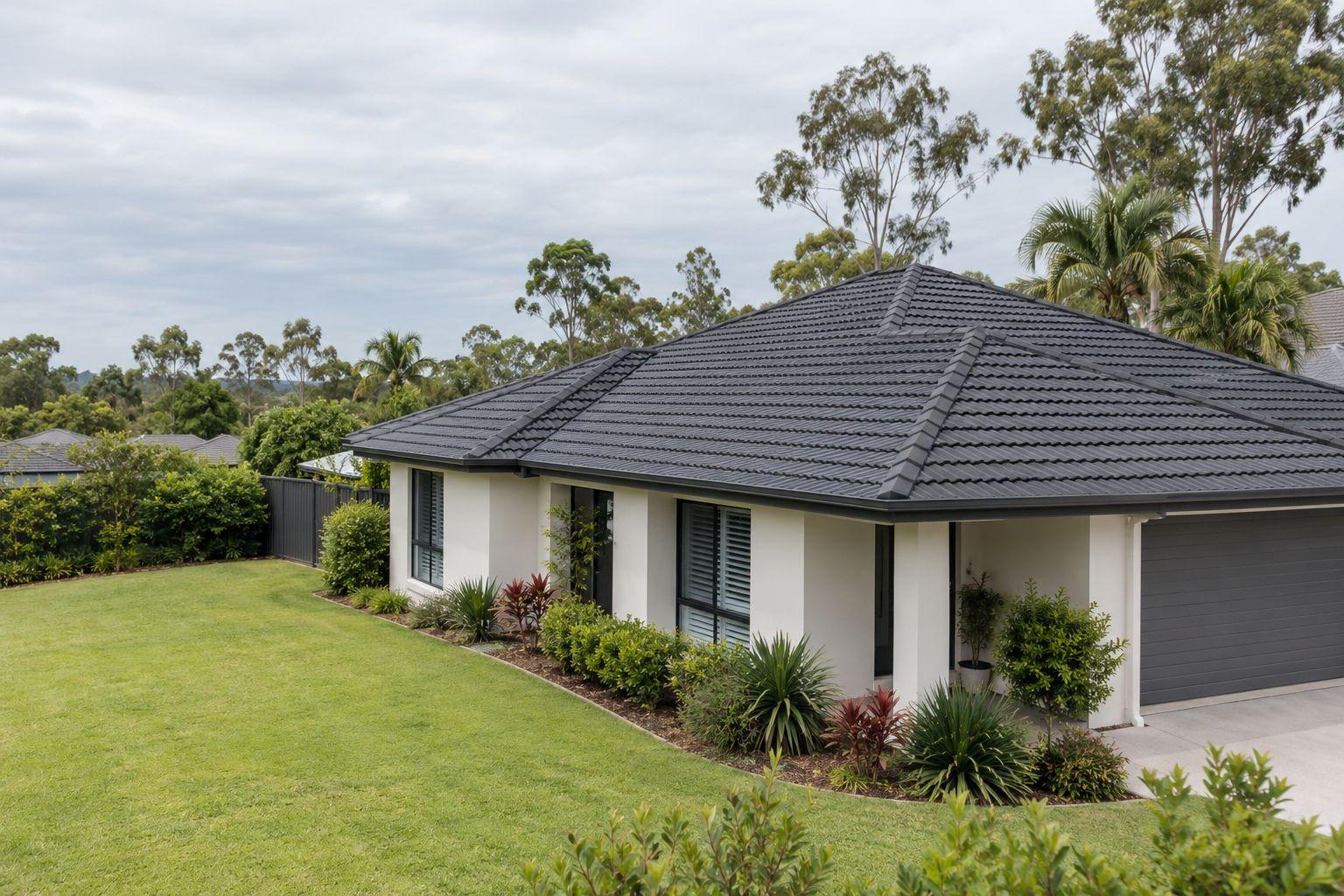
Colorbond is the stronger choice when you want a lightweight roof with no ridge mortar to maintain. Tiles suit homeowners who value quieter rain and want to keep a sound existing tiled roof. Neither material automatically makes a Queensland home cooler, and neither is hail-proof. Colour, insulation, coastal exposure and installation all matter.
If you're comparing them because your roof looks worn, check whether it needs replacing at all. At R&R Restorations, we repair and restore concrete tile, terracotta and Colorbond roofs across the Gold Coast, Brisbane and Logan, and the Tweed and Northern Rivers.
In summary
- Keep sound tiles if repairs and a roof restoration will solve the problem. Changing to Colorbond means a full re-roof, not a roof restoration.
- For summer comfort, compare roof colour and insulation together. A heavy tile is not a substitute for insulation.
- Metal sheets can dent in hail and still keep water out; broken tiles can leave an opening. Both need checking after damage.
- Near the coast, the steel grade and exposure matter. Repainting standard Colorbond does not turn it into Colorbond Ultra.
- Our published 2026 guide puts roof restoration at $6,500 to $9,500 for a medium tiled home, or $5,000 to $12,000 for metal, against about $25,000 to $45,000 for a new roof. The full comparison and source are below.
What is the difference between Colorbond and a tile roof?
Colorbond is BlueScope's factory-coated steel, formed into roofing sheets. A tiled roof uses individual concrete or terracotta tiles; terracotta is fired clay. The differences affect what wears out, how damage is repaired and what a material change involves.
| What matters to you | Colorbond steel | Concrete or terracotta tiles |
|---|---|---|
| Weight | Lighter covering; the roof still needs correct structural connections | Heavier covering; the frame must be designed to carry it |
| Summer heat | Colour, coating and insulation matter; steel releases stored heat quickly | Tiles store more heat, but still need insulation to limit heat entering the home |
| Rain noise | Can be louder without a suitable insulated roof-and-ceiling system | Generally quieter under comparable conditions |
| Hail | Can dent; damaged sheets and coatings need assessment | Can crack or shatter; individual damaged tiles can be replaced |
| Coastal salt | Correct steel grade, compatible fixings and maintenance matter | Tiles do not rust, but metal valleys, flashings and fixings still can |
| Ongoing work | Screws, flashings, corrosion and coating | Broken tiles, ridge joints, valleys and coating where appropriate |
| Appearance | Corrugated or other sheet profiles | Flat or curved tile profiles; concrete and terracotta finishes differ |
Our roof restoration work follows those differences. On tiles, we check the tiles and ridge joints. On metal, we check the sheets, screws and flashings before deciding what can be kept.
Is Colorbond or tile better for Queensland heat?
For Queensland heat, choose a roof with low solar heat absorption and suitable insulation rather than assuming either material is naturally cool. Thermal mass means a material's ability to store heat; it does not mean insulation. Tiles can hold heat after sunset, while thin steel responds more quickly as conditions cool.
The Australian Government's YourHome construction guide, updated in 2026, says tiled roofs need good insulation to minimise heat gain. It also identifies light colours and reflective finishes as ways to reduce summer heat gain through metal roofs.
BlueScope's thermal-performance bulletin, dated May 2023, explains another useful term: solar absorptance is the share of sunlight a surface absorbs as heat. A lower value means less absorbed solar heat. Similar-looking colours can have different values because the coating matters too.
Before replacing a roof to cool the house, ask:
- Is the roof dark, and could a suitable lighter finish help?
- Is the ceiling insulation adequate and in good condition?
- If re-roofing, what insulation, underlay and condensation control are included?
We can change the colour of suitable existing roofs during a roof restoration. But a new coating is not an insulation upgrade, and a repaint does not automatically carry the thermal performance of the original factory finish. Compare the proposed coating's own product data rather than a Colorbond colour name alone.
Which roof handles Brisbane and Logan hail better?
Metal roofing generally has an advantage in staying weathertight after hail: sheets may dent without opening a hole, whereas tiles can shatter. That is the distinction made in YourHome's construction guide. It is not a promise that Colorbond will escape damage or that every dent is harmless.
Local storm records show why a blanket claim that either roof is hail-proof would be wrong.
| Local storm | What the official record says |
|---|---|
| Brisbane, 27 November 2014 | The Bureau of Meteorology recorded very large hail, destructive winds and extensive structural damage in South Brisbane and the CBD. |
| South-east Queensland, 31 October 2020 | The Bureau recorded giant hail up to 14 cm in diameter at Forestdale, along a storm path into northern Logan. |
Sources: Bureau of Meteorology, November 2014 Brisbane summary, issued 1 December 2014; October 2020 Brisbane summary, issued 2 November 2020.
For an existing tile roof, the useful question is whether damage is limited to replaceable tiles or spread across the roof. On metal, the assessment needs to distinguish dents from damaged coatings, fasteners, seams or sheets that no longer shed water properly.
We replace broken tiles and repair metal-roof faults before coating. Paint is not a fix for a fractured tile or a hole through a sheet. After a storm, photograph what you can safely see from the ground and arrange an assessment rather than climbing onto the roof.
Is Colorbond suitable near the Gold Coast's salt air?
Colorbond can suit a coastal home, but the product must match the site's salt exposure. Standard Colorbond and Colorbond Ultra are not interchangeable, and the word “coastal” is too broad to choose between them.
BlueScope's roofing guidance, checked on 27 October 2026, gives this starting point:
| Distance from breaking surf | Manufacturer's general guidance for roofing |
|---|---|
| More than 200 metres | Standard Colorbond steel is generally recommended. |
| 100 to 200 metres | Colorbond Ultra steel is recommended. |
| Closer, or a different marine environment | Get product-selection advice for the actual exposure; do not assume standard Colorbond or Ultra is suitable. |
BlueScope measures the distance from the high-water mark and says local conditions, including prevailing winds and areas not washed by rain, affect performance. A house beside a sheltered waterway is not the same exposure as one facing breaking surf.
Tiles avoid corrosion of the tile itself. They do not remove the need to look after metal valleys, flashings and gutters.
For an existing coastal metal roof, our metal and Colorbond roof restoration service deals with surface rust, failed screws, lifted sheets and worn flashings before priming and recoating. If corrosion has eaten through much of the roof, we say so. A coating cannot replace missing steel or upgrade the factory steel grade.
Which roof is quieter and easier to maintain?
Tiles generally soften rain noise better than an otherwise comparable metal roof, while Colorbond avoids the ridge bedding and pointing found on many tiled roofs. Neither is maintenance-free. Insulation and the ceiling construction also affect how much rain you hear indoors.
The maintenance jobs are different:
| Roof type | What needs attention | How we handle it |
|---|---|---|
| Concrete tiles | Cracks, slipped tiles, worn colour, moss or lichen, failed ridge joints | Clean, replace broken tiles, repair ridge bedding and pointing, then seal and recoat where suitable |
| Terracotta tiles | Broken tiles, surface growth and failed ridge joints | Clean and repair; assess whether any coating is needed rather than assuming it is |
| Colorbond or other metal | Surface rust, failed screws, loose sheets and worn flashings | Clean, treat rust, replace failed screws, repair faults, then prime and recoat suitable sheets |
Rebedding means resetting ridge caps on fresh mortar. Repointing means renewing the outer pointing over the ridge joints. They are different jobs, so a quote should distinguish them.
Our tile roof restoration service makes the concrete-versus-terracotta distinction at assessment. Terracotta holds its colour in the clay; it does not automatically need the same recoating work as a faded concrete roof.
The same condition check matters on metal. Rodney's Google review, dated 22 April 2024, describes our work as having “turned my old rusty roof to look brand new”. That is a customer's account of one roof, not evidence that every rusty roof can be saved. We need to see whether the sheets are still sound.
Is Colorbond cheaper than tiles, or should you restore what you have?
There is no reliable cost winner based on the material name alone. A new-build roof, a tile-to-Colorbond conversion and a roof restoration are different jobs. If your existing roof is sound enough to keep, roof restoration is usually the lower-cost option because the whole covering does not come off.
These are the ranges in our published roof restoration cost guide, updated 27 October 2026:
| Work | Indicative 2026 cost | What you are paying for |
|---|---|---|
| Roof restoration, medium tiled home | $6,500 to $9,500 | Cleaning, tile and ridge repairs, and a suitable finish |
| Roof restoration, larger tiled roof | $9,000 to $13,000 | The same type of work over a larger roof |
| Metal or Colorbond roof restoration | $5,000 to $12,000 | Cleaning, corrosion treatment, failed-screw replacement and recoating |
| Full roof replacement, most family homes | About $25,000 to $45,000 | Removing the old covering and installing a new roof; steep or two-storey work can cost more |
These are published guide ranges, not fixed quotes. Size, pitch, access and repair work affect the price. The replacement figure is a comparison budget, not an offer from us to install a new roof.
For a new build, ask the builder to price the complete tile and Colorbond options for the same design. For a re-roof, the removal, disposal, battens, insulation, flashings and safety access can change the comparison. A price for sheets alone will not answer what your finished roof costs.
For an existing home, use this decision table before choosing a new material:
| What the assessment finds | Sensible next step |
|---|---|
| A localised fault, with the rest of the roof sound | Price a focused repair first. |
| Sound frame and battens, with repairable wear across the covering | Compare an itemised roof restoration quote with replacement. |
| Widespread crumbling tiles, extensive rust-through or structural failure | Have a re-roofing contractor assess replacement and any structural work. |
| A sound roof, but you want a different material | Treat the switch as a renovation choice, not a necessary leak repair. |
Our guide to restoring or replacing a roof covers the replacement decision in more detail. We check the existing roof before recommending work; faded colour alone is not a reason to throw it away.
Can you replace a tile roof with Colorbond without structural work?
You should not assume that a lighter Colorbond roof means no structural work is needed. The change reduces roof weight, but the new covering, battens and connections must still resist wind uplift. The required work depends on the existing house and its site.
Timber Queensland's wind tie-down guidance, hosted by QBCC, dated June 2016, explains that sheet-roofed houses need specific tie-down connections even at relatively low wind classifications. A weak connection can allow a roof to fail in wind.
Ask a re-roofing contractor to include:
- The roof's wind classification and required tie-down work.
- Batten condition and spacing for the chosen sheet profile.
- The profile's minimum roof pitch and drainage requirements.
- Insulation, underlay, flashings and any required approvals.
- Removal and reinstatement of existing solar panels, where needed.
A roof restoration does not change tiles into steel or redesign those connections. If your aim is to keep a sound roof and repair its covering, that is where our work fits.
Is R&R Restorations right for your roof?
We are a good fit when you want to find out whether your existing concrete tile, terracotta or metal roof can be repaired or restored. We are owner-operated by Alex Rowe, and our work covers the Gold Coast, Brisbane and Logan, Tweed Heads and the Northern Rivers.
Our assessment checks material, condition, pitch and access. The quote sets out the areas, preparation, repairs and finish, with exclusions made clear. For tiles, compare the allowance for broken tiles and ridge work. For metal, compare rust treatment, screws and sheet repairs, not just the paint colour.
We are not the right next step if you already know the roof needs a full material-changing re-roof or structural redesign. A re-roofing contractor and the appropriate building professionals need to scope that work. We also will not recommend coating a roof whose underlying problems make roof restoration poor value.
Frequently asked questions
Which roof is better for heavy rain?
Both tile and Colorbond roofs can keep heavy rain out when their pitch, flashings and drainage are suitable and the roof is sound. On an older roof, a cracked tile, failed screw or worn flashing can matter more than the material. We repair the cause rather than painting over the leak.
Is a tin roof cheaper than a tiled roof?
Not necessarily. “Tin roof” commonly means metal sheeting, but the finished price depends on the product and work involved. Compare complete installed quotes. If the existing roof is repairable, compare roof restoration before paying for either new covering.
Which lasts longer: Colorbond or tiles?
There is no single lifespan that settles the choice for an existing house. Exposure, installation, maintenance and the condition of the frame, fixings and covering all matter. A tile or sheet can remain usable while its joints, screws or coating need attention; we assess those separately.
Can you paint tiles to look like Colorbond?
We can recoat suitable concrete tiles in a different colour, but they will still have a tiled profile. A roof restoration can change the finish without changing the material. Terracotta needs its own coating assessment.
Can both roof types take solar panels?
Yes, with a mounting system suited to the roof and installed correctly. Tell us if panels are already fitted or planned so access and any removal work can be considered before the roof restoration is quoted.
Which roof is better environmentally?
Both materials have manufacturing impacts, and reuse or recycling depends on the product and local facilities. YourHome notes that metal roofing has high end-of-life recycling or reuse rates. For an existing roof, keeping serviceable tiles or sheets also avoids discarding the whole covering unnecessarily.
How do you find out whether your roof is worth keeping?
Start with its condition, not a colour chart. Send us your suburb, roof type and what you have noticed, with photos taken safely from the ground if you have them. We will assess what the roof needs and arrange a visit where necessary.
Get a roof restoration assessment and itemised quote before committing to a new roof.