Cracked or broken roof tiles: repair or roof restoration? (2026)
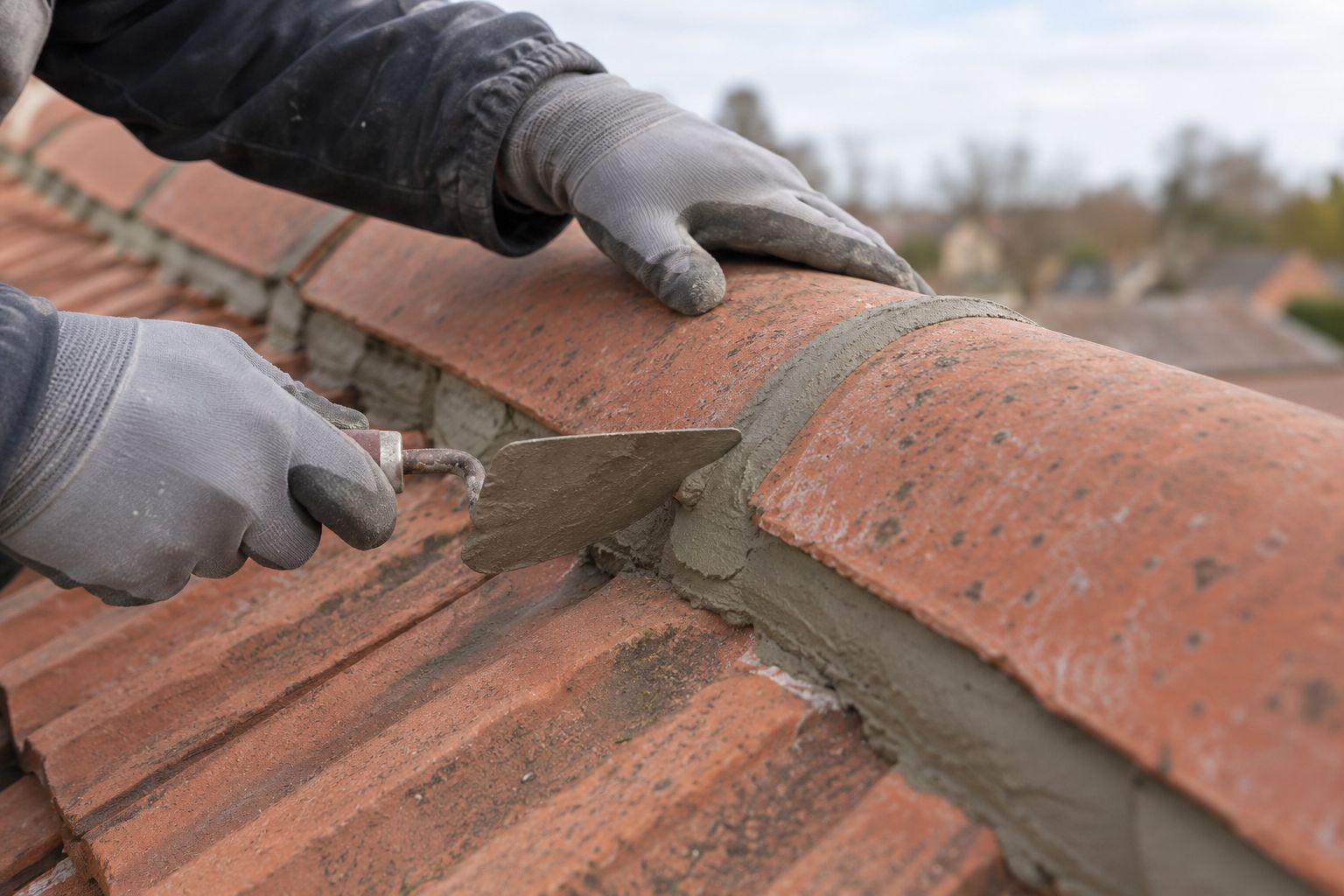
Fixing roof tiles usually means replacing the damaged tiles, not replacing the whole roof. If the surrounding tiles, ridge joints and structure are sound, a focused repair is often enough. When broken tiles come with failing ridge joints and wear across the roof, a roof restoration may make more sense.
At R&R Restorations, we replace damaged concrete and terracotta tiles as part of both roof repairs and roof restoration. We assess the cause and condition before recommending either. A cracked tile alone is not a reason to repaint your roof.
In summary
- Replace split or broken tiles with the correct matching profile. A similar colour does not mean a tile fits.
- A focused repair is commonly $350 to $1,500 in our published October 2026 cost guide. That is a guide for the job, not a price per tile.
- Failed ridge joints may need rebedding or repointing without a full roof restoration. Widespread wear needs a broader assessment.
- Stay off the roof, especially on a two-storey home or in wet weather. Ground-level photos are enough to start an enquiry with us.
Can a cracked roof tile be repaired, or should it be replaced?
A cracked or broken roof tile should generally be replaced. An intact tile that has slipped may be repositioned, but the roofer also needs to check why it moved and whether its support or fixing has failed.
That distinction agrees with Monier's roof maintenance advice, checked on 27 October 2026: replace individual cracked or broken tiles, put displaced tiles back in position, and keep the drainage channels beneath their side overlaps clear.
A tile can have damage that is hidden by the tile beside it. The visible face may look fine while a broken edge or water channel underneath lets rain through. We look for the cause of the leak rather than assuming the most obvious crack explains it.
Can you use silicone or roof sealant instead?
A suitable roof sealant can be a temporary measure in some circumstances, but it does not turn a broken tile back into an intact one. For a lasting repair, replacing the damaged tile is the better starting point. Our tile repair work includes replacement, rather than relying on paint to hide a crack.
Smearing sealant over tile overlaps can also create a different leak. RAC WA's guide to roof leaks, checked on 27 October 2026, explains that sealant can block the channels designed to carry water down a tile. Water then backs up instead of draining to the tile below.
If a matching tile is difficult to find, ask the roofer to explain any proposed temporary repair and what still needs doing. Do not climb onto a wet roof to apply a patch.
How do you find matching replacement roof tiles?
Match the tile's shape and fit before its colour. A replacement needs to sit correctly on the roof and interlock with the neighbouring tiles; a tile that looks similar from the driveway can still be wrong.
A tile profile is its shape, including the raised sections, channels and edges that fit against neighbouring tiles. Concrete and terracotta tiles come in different profiles, and the manufacturer's name alone does not prove that a replacement will fit.
Specialist supplier Recycling Roof Tiles explains how it identifies older tiles in its August 2026 guide. The checks include underside markings, dimensions, side interlocks, water channels and the nibs that locate the tile on the battens. Battens are the horizontal supports beneath the tiles.
If you already have a spare tile stored safely at ground level, useful details are:
- A photo of its top and underside, including any stamped name or code.
- Its length and width, and a side-on photo showing its shape.
- Whether you have other spare tiles from the same roof.
Do not remove a roof tile yourself to get that information. Tell us about any spares when you enquire; matching and replacement belong in the repair assessment.
Discontinued tiles may be available as sound reclaimed stock, but availability and fit need checking. We cannot confirm an exact colour match from a roof photo. On a concrete roof that also needs roof restoration, recoating can even out the colour after the repairs. A colour difference alone does not make a full roof restoration necessary.
Is it a tile repair, ridge repair or full roof restoration?
Choose the work according to where the faults are and whether the underlying roof is sound. Replacing damaged tiles, repairing ridge joints and carrying out a full roof restoration are different scopes; you do not automatically need all of them.
| What the assessment finds | Work to consider | Why |
|---|---|---|
| Isolated cracked or broken tiles, with the surrounding roof sound | Focused tile replacement | Fixes the damaged area without coating the whole roof |
| Sound tiles but cracked pointing or loose ridge caps | Ridge repointing, with rebedding where needed | Repairs the ridge joints rather than replacing sound tiles |
| Broken tiles in several areas, failing ridge joints and a worn surface, with sound structure underneath | Roof restoration | Brings the required repairs and surface work into one job |
| Widespread tile failure, rotten supports or a sagging roofline | Further assessment for structural repairs or roof replacement | Paint and isolated tile repairs will not fix failed supports |
Ridge caps are the shaped tiles covering the peaks and hips of a tiled roof. Bedding is the mortar beneath them. Repointing renews the outer pointing; rebedding lifts the caps and resets them on fresh mortar where the bedding has failed.
Our ridge capping and repointing work includes rebedding where needed, followed by flexible pointing. If the rest of the roof is sound, ridge work can be a separate job.
Julie described that part of our work in her Google review dated 20 October 2026, published on our website:
“They did a phenomenal job bringing our tired roof back to life, including fully cleaning it and completely repointing the ridge caps.”
For a roof restoration, we assess the material as well as the damage. Concrete tiles may need cleaning, repairs, sealing and recoating. Terracotta holds its colour in the clay, so the work often centres on cleaning, replacing broken tiles and rebuilding ridge joints. We discuss whether a terracotta roof needs a coating at all.
If the roof is failing underneath, our guide to roof restoration versus roof replacement explains the distinction. We do roof repairs and roof restoration; we will tell you when those are not the right spend.
How much does fixing roof tiles cost?
A focused roof repair, such as replacing damaged tiles or reseating a ridge cap, is commonly $350 to $1,500. Wider repairs or difficult access can put the work at $1,500 to $6,000. The number of tiles matters, but so do safe access and any faults around or beneath them.
These are the indicative ranges in our roof restoration and repair cost guide, published in October 2026:
| Scope | Published guide range | What you are comparing |
|---|---|---|
| Focused roof repair | $350 to $1,500 | A defined fault, such as damaged tiles or a ridge cap |
| Wider roof repairs | $1,500 to $6,000 | More extensive faults or difficult access |
| Ridge repointing on its own | About $1,750 to $3,500 on an average roof | Ridge work where the rest of the roof is sound; confirm any rebedding separately |
| Full tiled roof restoration, medium home | $6,500 to $9,500 | Cleaning, tile repairs, ridge work and the agreed finish |
| Full tiled roof restoration, larger roof | $9,000 to $13,000 | A broader job across a larger roof |
These are budgeting ranges, not fixed prices or a quote for your home. We confirm the scope and price after assessment.
A replacement tile's supply price cannot tell you the cost of the installed repair. A tile beside a ridge, valley or solar panel can involve different work from an accessible tile on an open roof slope.
Our quote sets out the areas, repairs, preparation and finish included, with exclusions and possible changes made clear. When comparing quotes, check the allowance for replacement tiles, whether ridge caps need rebedding or only repointing, and what is included for access. Ask whether GST is included in the total rather than assuming it.
Can you replace roof tiles yourself on a two-storey house?
We recommend leaving roof tile replacement on a two-storey house to a roofer with a planned safe-access system. Being able to reach a tile from a ladder does not make it safe to remove or replace. A single-storey roof can also present a serious fall risk.
WorkSafe Queensland's roof-fall guidance, published on 24 December 2024, identifies height, roof pitch, slippery surfaces and access as factors in fall risk. It also explains why a harness alone is not a complete safety system: anchorage, training and rescue arrangements matter.
We work on two-storey homes and include the required safety equipment and set-up in our quote. Tell us about the height, steep sections, solar panels and narrow access before the assessment.
From the ground, you can photograph a displaced tile, a visible gap or fallen fragments. Do not climb onto the roof to count cracks or fetch a sample. Avoid entering the roof space to trace a leak yourself; electrical hazards and damaged ceilings need proper assessment too.
What happens when broken roof tiles are replaced?
A proper tile repair starts with identifying the fault and ends with the replacement correctly seated and secured for that roof. Swapping the visible broken tile is only part of the work if nearby drainage, ridge joints or supports are also damaged.
Our enquiry and quote process is straightforward:
- Tell us what you have noticed. Include your suburb, roof type, where the damage appears and whether water is coming inside. Ground-level photos are optional.
- We assess the roof. We check the material, condition, pitch and access, and arrange a visit if needed. A ceiling stain does not necessarily sit beneath the entry point.
- We set out the scope. The quote identifies the repair areas and any wider work needed, rather than assuming every tile problem needs roof restoration.
- We agree access and timing. Weather and safe access affect when the repair can go ahead.
The replacement itself needs the correct tile profile, sound support and the appropriate fixings. Neighbouring tiles disturbed during the work must sit back correctly, with their overlaps and water channels clear. These are checks for the roofer, not an invitation to pull tiles out yourself.
What should you do if a broken tile is leaking?
Keep people away from a sagging ceiling, protect belongings where it is safe, and stay off the roof. A bucket can catch a drip, but only place it where you are clear of damaged ceilings and electrical fittings.
If water is reaching lights, fans or wiring, keep clear and arrange electrical help. Only switch off power if the switchboard is dry and safe to reach. Do not enter a wet roof space to find the cracked tile.
Our leaking-roof guide covers immediate steps and who to call for storm assistance. Our repair work deals with the cause once conditions allow safe access. Tell us when the leak appears: in any rain, only in a downpour, or when wind drives rain against a particular side of the house.
Is R&R Restorations right for your roof?
We are a good fit if you need damaged tiles replaced, ridge joints repaired or an assessment of whether roof restoration is worthwhile. We are owner-operated by Alex Rowe and service the Gold Coast, Brisbane and Logan, Tweed Heads and the Northern Rivers.
A focused repair is a sensible starting point when your roof is otherwise sound. If several areas need work, we can explain the broader scope and give you an itemised quote. You do not need to decide on roof restoration before contacting us.
We are not the right next step for an active electrical hazard or a ceiling at risk of collapse; make the home safe first. And if the roof needs structural work or replacement, a coating from us will not solve it. We will say so rather than recommend roof restoration over a failed roof.
Frequently asked questions
Will one cracked roof tile cause a leak?
It can. The location of the crack, tile overlaps and the condition of any sarking underneath affect where water goes. Sarking is a membrane beneath the roof covering; it does not remove the need to replace a broken tile.
Does a hairline crack need attention if the ceiling is dry?
Yes, have it assessed. A dry ceiling does not prove that a tile is sound or that water is staying out of the roof space. We replace damaged tiles rather than waiting for a ceiling stain to establish the problem.
How are roof tiles attached to the roof?
Roof tiles overlap and sit on battens, often with moulded nibs locating them. Nails or clips secure tiles according to the roof system and its fixing requirements. A replacement needs the correct fit and fixing, not just a similar appearance.
Can you replace concrete and terracotta roof tiles?
Yes. We replace broken concrete and terracotta tiles as part of roof repair and roof restoration work. Matching the profile is part of assessing the repair; an exact colour match depends on the available tile and the existing finish.
Do all the tiles need replacing if the original profile is discontinued?
Not necessarily. Compatible reclaimed tiles may allow a localised repair. The roofer needs to check their condition and physical fit. Do not accept an almost-matching tile solely because the colour is close.
Will painting fix cracked roof tiles?
No. Painting is not a substitute for replacing broken tiles or repairing failed ridge joints. We carry out the required repairs before coating a roof; on terracotta, a coating may not be needed at all.
Does roof restoration include replacing broken tiles?
Yes. Our tiled roof restoration work includes replacing damaged tiles and repairing the ridge joints, with the preparation and finish set out in the quote. Ask what tile allowance is included so you can compare the scope properly.
How do you get a quote for your broken roof tiles?
Start with your suburb, the number of storeys and what you can see safely from the ground. Mention any spare tiles and whether there is a leak inside. We can then assess whether you need a focused repair, ridge work or roof restoration.