Roof repointing cost: ridge capping, rebedding and lifespan (2026)
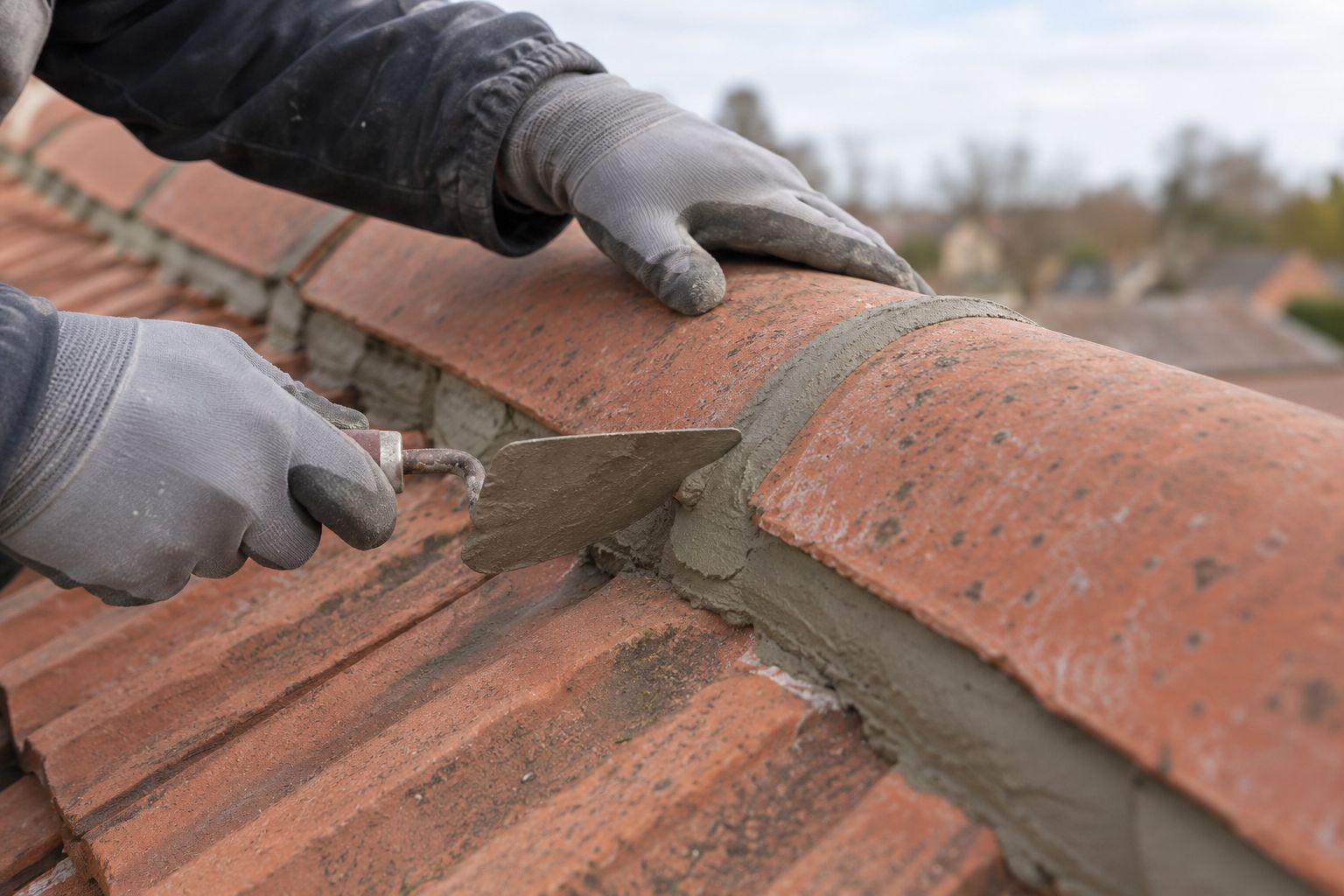
Roof repointing commonly costs $25 to $30 per lineal metre, or about $1,750 to $3,500 for an average roof, in our published Gold Coast and Brisbane cost guide. Repointing replaces the worn outer seal around a tiled roof's ridge caps. If the mortar underneath has failed, the caps need rebedding as well. At R&R Restorations, we check that distinction before quoting, because new pointing over loose bedding leaves the underlying problem in place.
These are indicative October 2026 price ranges, not a fixed price for every roof. Your ridge length, bedding condition and access decide the scope.
In summary
- Allow about $25 to $30 per lineal metre for repointing, with a typical whole-roof budget of $1,750 to $3,500.
- Repointing renews the outer seal. Rebedding replaces the mortar beneath the caps. A roof can need both, in different places.
- Count the capping along the hips as well as the top ridge. Floor area alone won't tell you the repointing cost.
- There is no single lifespan for every repointing job. Sound bedding, preparation, the pointing product and weather exposure all matter.
- If the ridge joints are the only problem, we can quote repointing on its own. You don't automatically need roof painting or a full roof restoration.
What is ridge capping, and what does repointing do?
Ridge capping is the row of shaped tiles covering the joins at the peaks and hips of a tiled roof. Repointing renews the outer material along those caps, helping keep rain out and secure the capping.
The ridge is the high line where roof slopes meet. A hip is the sloping outer corner running down towards the eaves. Both can carry capping, so a quote for “ridge repointing” may cover much more than the horizontal line at the top.
There are two layers around a traditionally bedded cap:
- Bedding: the mortar underneath, which supports the cap in position.
- Pointing: the exposed finishing layer along the cap edges and joints.
Older pointing can be sand-and-cement mortar. Modern flexible pointing moves with normal roof movement rather than acting as a rigid outer layer. Our ridge capping repointing service uses flexible pointing, with rebedding where the mortar beneath has failed.
This applies to concrete and terracotta tiled roofs. A metal or Colorbond roof also has ridge capping, but its sheet-metal capping and fixings need a different repair; it isn't the mortar repointing priced here.
How much does roof repointing cost on the Gold Coast and in Brisbane?
Our published repointing guide is $25 to $30 per lineal metre, with about $1,750 to $3,500 as a typical whole-roof total. A short, isolated ridge repair can be a smaller job; extensive rebedding, damaged caps or difficult access can put the work outside that typical range.
| Work | Published price guide | When it fits |
|---|---|---|
| Ridge repointing | $25 to $30 per lineal metre | The outer pointing needs replacing and the bedding is sound |
| Typical whole-roof repointing | About $1,750 to $3,500 | Ridge joints need attention across the roof, while the rest is sound |
| Focused roof repair | Commonly $350 to $1,500 | A small, defined fault, such as damaged tiles or a ridge cap that needs reseating |
| Rebedding plus repointing | Quoted after assessment | The mortar beneath the caps has failed; don't assume it is included in a repointing-only rate |
Source: our roof restoration and repair cost guide, checked 27 October 2026. The figures are budgeting ranges. The written quote confirms the work and total; ask whether GST is included.
“Lineal metre” and “linear metre” mean the same thing here: a metre along the capping. They do not mean a square metre of roof surface. Before comparing prices from different websites or roofers, check the unit and what work it includes.
What would a Queensland roof with 70 metres of capping cost?
At the published rate, 70 metres × $25 to $30 = $1,750 to $2,100 for the repointing calculation. That assumes the bedding is sound; it is not an all-inclusive quote for an unseen roof.
Imagine a single-storey tiled home in Logan with a main roof and a garage roof:
| Capping run | Assumed length |
|---|---|
| Main horizontal ridge | 18 m |
| Four hips at 9 m each | 36 m |
| Garage ridge and hips combined | 16 m |
| Total capping | 70 m |
This is a worked example, not a completed customer job. The lengths are assumed; the prices are calculated from our published October 2026 range.
If the assessment finds loose bedding on one hip, that section needs a rebedding allowance. If caps are broken, replacement needs to be listed too. Those findings change the job even though the total capping length hasn't changed.
You can use house plans to identify the ridge and hip runs, but leave the final measurement to the roofer. An overhead image can help show the roof's shape; it doesn't give the true length of a sloping hip without allowing for its slope. Don't climb up to measure it.
What's the difference between rebedding and repointing?
Repointing replaces the outer pointing while sound bedding stays in place. Rebedding means lifting the ridge caps, removing failed bedding mortar and setting the caps on a fresh bed before pointing them.
| What the roof assessment finds | Likely work | What to check in the quote |
|---|---|---|
| Cracked or missing outer pointing, with secure caps and sound bedding | Repointing | The ridge and hip runs included, and surface preparation |
| Loose or displaced caps with failed bedding beneath | Rebedding, then repointing | Which sections need fresh bedding, rather than a surface repair |
| Cracked capping tiles | Replace damaged caps, then bed and point as needed | Replacement caps listed separately |
| Sound ridges but a leak at a tile, valley or flashing | Repair the actual leak source | Why ridge work is, or isn't, part of the repair |
We rebed where the bedding has failed, then apply flexible pointing. That does not mean every roof needs every cap lifted. Equally, a tidy new pointing line cannot make crumbling bedding underneath sound again.
Ask the roofer to show you the condition of the bedding, ideally with photographs. A view from the driveway may reveal a gap or a displaced cap, but it won't reliably establish whether the bed beneath each cap is sound. Leave any hands-on testing to the person assessing the roof.
What makes a repointing quote higher or lower?
Capping length and the condition underneath it drive the work, while roof height, pitch and access affect how it can be done safely. Our assessment checks those details before the quote sets out the repairs and preparation.
| Factor | Why it changes the work |
|---|---|
| More hips, roof sections or a tiled garage | More capping to prepare and repoint, even on homes with similar floor areas |
| Failed bedding | Caps must be lifted and reset, not only sealed around the edges |
| Broken concrete or terracotta caps | Replacement tiles must suit the existing roof |
| Old loose pointing, dirt or growth | Material that prevents a sound bond needs removing before new pointing |
| Steep or two-storey roof | Extra safety equipment and setup, plus more difficult access |
| Restricted access or nearby solar panels | The working area and access need checking before a price is settled |
| Other faults found | Cracked tiles, damaged flashings or valley problems need their own repair scope |
Don't multiply a tiny damaged section by the metre rate and assume that's the call-out price. Setting up to repair one cap still takes time and equipment. Our published focused-repair range is a better starting point for an isolated fault than the whole-roof calculation.
How long does roof repointing last?
There isn't a reliable lifespan that applies to every repointed roof. The condition of the bedding, how well the surfaces are prepared, the product used and the roof's exposure all affect how long the pointing stays sound.
hipages' repointing guide, updated 7 February 2025, recommends repointing every 10 years. That is general maintenance advice, not proof that every roof needs replacement pointing on its tenth anniversary, or that damaged pointing is safe until then.
Tile manufacturer Monier recommends professional roof inspections ideally every five years and modern flexible compounds for bedding and pointing repairs. Its guidance was checked on 27 October 2026. An inspection interval is not a replacement interval: the condition found determines what needs doing.
For our work, the useful questions are whether the bedding needs rebuilding and whether the new pointing has a sound surface to bond to. We won't treat a layer of fresh pointing as a substitute for fixing a failed bed. If you notice new gaps, displaced caps or a leak after the work, have the roof checked rather than waiting for a calendar date.
How can you tell whether your ridge capping needs attention?
Visible gaps, crumbling pointing and caps that have moved out of line are reasons to arrange an assessment. A leak can also come from the ridge, but it can come from other parts of the roof.
From the ground, look for:
- Missing sections in the pointing beside ridge or hip caps.
- A cap sitting out of line with the rest.
- Mortar fragments that have fallen to the ground.
- New ceiling staining after rain, especially when the wind comes from a particular direction.
Phone zoom or binoculars can help you photograph a visible fault without getting on the roof. We accept ground-level photos with an enquiry, together with your suburb, roof type and what you've noticed.
A ceiling stain alone doesn't prove the ridge needs repointing. Our guide to a leaking roof explains the other common causes and what to do while you arrange a repair. We check the cause before proposing ridge work.
What should happen during a repointing job?
A repointing job should deal with loose material and failed bedding before the new pointing goes on. We assess the roof first, agree the scope, rebed failed sections where needed and apply flexible pointing.
The sequence to look for is:
- Assess the caps, pointing, bedding and nearby tiles, with safe access in place.
- Remove loose or failed material and prepare the surfaces that will receive the pointing.
- Replace damaged caps or tiles and rebed sections included in the agreed repair scope.
- Apply the flexible pointing according to its product instructions, including drainage details.
- Check the completed work and remove the debris from the repair.
Weather and drainage deserve attention. For example, Selleys' Point Works instructions say not to apply it in wet conditions or when rain is expected within 12 hours. They also require weep holes in the pointing and bedding mortar. This manufacturer guidance was checked on 27 October 2026. Different products have different weather limits; the instructions for the product on your quote are the ones that matter.
Weep holes are deliberate small drainage openings. They are different from random cracks or missing pointing, so don't fill every small opening you can see with sealant. Ask the roofer to explain it. A repair needs to keep unwanted water out without blocking the drainage the roof requires.
Can you repoint without painting or doing a full roof restoration?
Yes. We can quote ridge repointing on its own when the ridge joints have failed but the rest of the roof is sound. A faded colour alone doesn't mean the roof needs replacing, and paint is not a repair for loose caps or cracked pointing.
A full roof restoration is worth discussing when the roof needs several kinds of work, such as broken-tile replacement, ridge repairs, cleaning and a new finish. Compare the combined scope with the repairs you need now rather than assuming the larger package is better value.
If the structure beneath the tiles has failed, repointing won't solve that either. Our roof restoration versus roof replacement guide explains when keeping the existing roof makes sense and when it doesn't.
Is R&R Restorations right for your ridge repair?
We're a good fit if you want a tiled roof assessed for repointing, rebedding or related repairs across the Gold Coast, Brisbane and Logan, Tweed Heads or the Northern Rivers. We're owner-operated by Alex Rowe, and our quote sets out the areas, repairs and preparation included, with exclusions made clear.
You don't need to book a full roof restoration to ask us about a failed ridge joint. We do focused repairs as well.
Repointing is the wrong service if your leak comes from a metal-roof fixing, a failed flashing or a blocked valley. We can assess roof repair needs, but the answer won't be to put pointing somewhere it doesn't belong. If the roof is beyond repair, we'll tell you rather than quote ridge work as the cure.
Before accepting any quote, check:
- Which ridge and hip sections are included, and their measured lengths.
- Whether the work is repointing only or includes rebedding, and where.
- Whether replacement caps or broken tiles are allowed for.
- The preparation, pointing material and safety setup included.
- The total, GST treatment, exclusions and how additional work is handled.
Frequently asked questions
Is ridge capping repointing priced per metre or per square metre?
Our published guide uses lineal metres along the capping, not square metres of roof area. Include the hips and any other capped roof sections in the measurement. The final quote also accounts for condition and access.
Can only one section of ridge capping be repaired?
Yes, when the fault is confined to that section and the surrounding work is sound. We assess whether a focused repair is enough rather than assuming the whole roof needs repointing.
Will repointing stop a roof leak?
It can stop water entering through failed ridge pointing, with rebedding if needed. It won't repair a cracked tile, damaged flashing or blocked valley elsewhere, so the leak source needs checking first.
Does terracotta ridge capping need repointing?
It can. Terracotta tiles and their mortar joints are different materials: a sound tile doesn't mean the bedding and pointing are still sound. We assess the caps and joints separately.
How long does a repointing job take?
The length of the ridges, rebedding required, access and weather decide the schedule. We agree the scope and timing before work starts. Product drying requirements also matter; finishing the application isn't the same as completing the cure.
Can I repoint ridge caps myself?
Leave roof access and repointing to a roofing professional. There is a fall risk, tiles can break underfoot, and the repair depends on diagnosing the bedding correctly. Ground-level photos are enough to start an enquiry with us.
How do you get a quote for your roof?
Send us your suburb, roof type and a description of the problem through our roof repairs enquiry. Add photos taken safely from the ground if you have them. We'll assess whether you need repointing, rebedding or a different repair, then set out the work in an itemised quote.