Roof Leak Detection: How a Roofer Finds the Leak (2026)
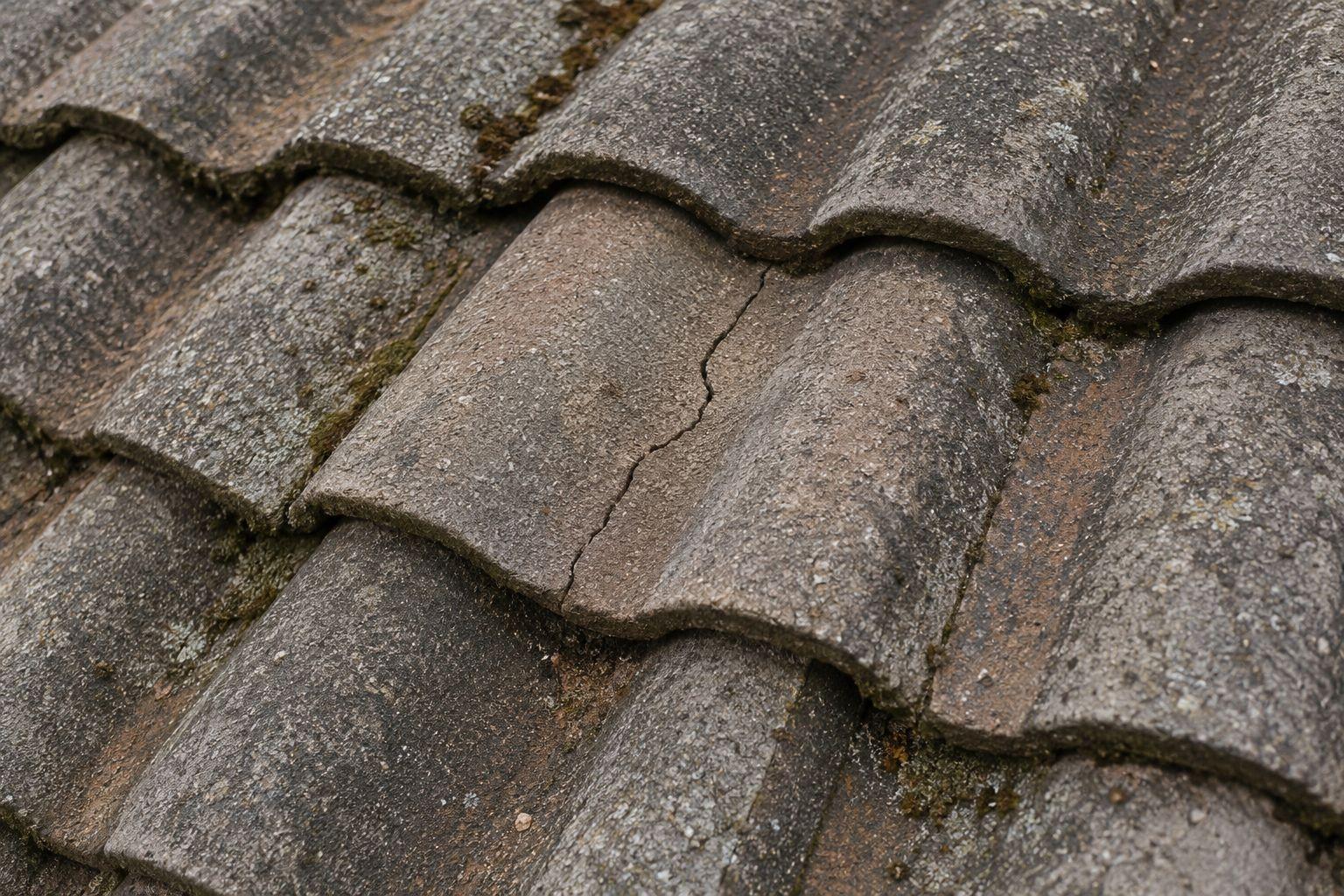
Roof leak detection is how a roofer traces the water on your ceiling back to the spot where it gets into the roof, which is rarely right above the stain. A good roofer asks when it leaks, checks the whole roof above and uphill of the stain, looks in the roof space with the power off, and runs a controlled water test, one section at a time, when the cause still isn't plain to see. Moisture meters and thermal cameras show where water has spread inside. They can't show you the cracked tile.
What you want is a dry ceiling after the next storm, and one repair that holds instead of three patches that don't. That's the job we do at R&R Restorations. Finding where the water gets in is part of every roof leak repair we quote, on concrete tile, terracotta and Colorbond roofs across the Gold Coast, Brisbane, Logan, Tweed Heads and the Northern Rivers. You deal with the owner, Alex Rowe, from the first call to the finished repair.
"The ridge line looks incredibly clean and secure now, and the whole roof is completely watertight." (Julie, Google review, 20 October 2026)
In summary
- The stain shows where water lands, not where it gets in. Water runs along battens, rafters and sarking before it drips.
- Professionals work in order: your notes on when it leaks, the whole roof from outside, the roof space with the power off, then a controlled water test if the cause still isn't clear.
- Thermal cameras and moisture meters map damp inside the house. The entry point is found, and fixed, on the roof.
- Stand-alone detection commonly costs $250 to $600 with water testing (Yakka Labour, 2026). With us, finding the leak is part of the repair quote, and a focused repair is commonly $350 to $1,500.
- Call a specialist detection firm if you need an insurance-ready report with thermal images. Call us if you want the leak found and fixed by the same people.
How do professional roofers detect a roof leak?
Professional roofers detect a roof leak by working from the evidence inside your house to the entry point on the roof, ruling out suspects in a set order instead of guessing. The water test comes last, once the quicker checks have narrowed the search.
This is how we trace a leak:
- We start with your notes. Which room, which side of the house, and when it leaks: in any rain, only in heavy rain, only when the wind comes from one side, or hours into a long storm. Tell us which way the wind was blowing, because that narrows the search to one face of the roof, one valley or one ridge. Photos from the ground help and are optional.
- We check the whole roof, starting above the stain and working uphill. That means the tiles, the ridge caps and their pointing, the valleys, the flashings at walls and vents, and the screws and sheet laps on metal. We look at the whole roof, not just the patch above the stain, because a repair in the wrong spot leaves the real fault letting water in two metres uphill.
- We look underneath, from the roof space, where it's safe. Stained timber, damp insulation and rust marks under screws show the path the water took. Daylight through the tiles shows where it came in.
- If the cause still isn't clear, we water test. One person runs a hose over one section of roof at a time, starting low and working up, while another watches from inside. Starting low matters. Soak the top first and the water runs over every joint below it, so you can't tell which one let it in.
- We explain what we found and quote the fix. The quote lists each repair separately. If the leaks come from wear across the whole roof, we tell you when a roof restoration is better value than another patch.
Can you do any of this yourself? You can do step one, safely, from inside and from the ground. Our guide on how to find where a roof leak is coming from shows you what to record. Leave the roof, the roof space and the hose to a roofer: a hose in the wrong place pushes water in where rain never would.
Which leak detection tools work, and what does each one show?
No single tool finds every roof leak. A roof inspection and a controlled water test find the entry point. Moisture meters and thermal cameras find where water has travelled inside the house. Drones photograph roofs that are unsafe to walk, and UV tracer dye tells two nearby sources apart.
| Method | What it shows | What it can't show | Best used for |
|---|---|---|---|
| Visual roof inspection | Cracked or slipped tiles, crumbling ridge pointing, rusted screws, lifted sheets, worn flashings, blocked valleys | Faults hidden under ridge caps or sheet laps | Every leak, as the first look |
| Roof space inspection | The water trail on timber, sarking and insulation; daylight through tiles | The outside fault itself | Following the path back uphill |
| Controlled water test | Which section of roof lets water in, by wetting one at a time | Leaks that need hard, wind-driven rain to show | Proving the entry point when it isn't raining |
| Moisture meter | How wet the plasterboard or timber is at one spot | Where the water came in | Checking a ceiling has dried out |
| Thermal (infrared) camera | Cooler, damp patches in ceilings and insulation without cutting holes | The faulty tile, screw or flashing on the roof | Mapping how far the water has spread |
| UV tracer dye | Which of two nearby sources the water came from, such as a skylight or the roof beside it | General roof condition | Skylights, windows and walls |
| Drone | Photos of steep, high or fragile roofs | What's under the caps and laps; it can't run water | Roofs that can't be walked safely |
A thermal camera is a useful tool, but a thermal image of a damp ceiling is a picture of the symptom. The repair happens on the roof, at a cracked tile, a ridge cap that's lost its pointing, a screw whose washer has perished or a flashing that's lifted. That's where we spend our time, because that's where the water gets in and where the fix goes.
Can a roof leak be found when it isn't raining?
Yes, most of the time. A dry-weather inspection shows the obvious faults and the old water trails, such as stained timber and rust marks, and a controlled water test recreates the rain one section at a time.
The hard ones are leaks that only show in heavy, wind-driven rain. A garden hose can't always copy a summer storm driving rain sideways under the ridge caps, so your notes from the last storm do the work the hose can't. Leaks that only show in heavy or wind-driven rain usually come from ridge caps, flashings or overflowing gutters, so those are what we check first. Our guide to why a roof only leaks in heavy rain covers the patterns in detail.
How do roofers find a leak on a metal roof or a tile roof?
Roofers find a leak on a metal roof the same way as on a tile roof, in the same order, but the usual suspects are different. On metal it's screws, sheet laps and flashings. On tiles it's ridge caps, cracked tiles and valleys.
| Roof | Where we look first | The clue that points there |
|---|---|---|
| Concrete tile and terracotta | Ridge caps and their pointing | A leak in wind-driven rain; cracked or crumbling pointing along the ridges and hips |
| Concrete tile and terracotta | Cracked or slipped tiles | Often after hail, or after an antenna, solar or air-conditioning installer has walked the roof |
| Concrete tile and terracotta | Valleys and the tiles below a downpipe spreader | Leaks in heavy rain, often on two-storey homes where the upper roof drains onto the lower one |
| Concrete tile and terracotta | Tile channels blocked by moss or old sealant | RAC WA warns that blocked channels make water pool and overflow into the roof |
| Colorbond and other metal | Screws and their washers | Rust around the screw heads; a drip that lines up with a row of fixings |
| Colorbond and other metal | Sheet laps and lifted sheets | Leaks after a storm, or where one sheet overlaps the next |
| Colorbond and other metal | Flashings at walls, pipes and vents | Damp near an outside wall, a skylight or a flue |
| Colorbond and other metal | Condensation, not a leak | Drips on cold, dry mornings with no rain at all |
Metal roof leak detection has one extra trap: water can run along the sheet's pans for metres before it finds a gap, so the drip inside can sit a long way from the fault. Near the beach and the Broadwater, salt air also rusts screws and flashings faster than it does further inland. Our guide to metal roof leak repair goes through the fixes once the fault is found.
How much does roof leak detection cost?
Stand-alone roof leak detection commonly costs $250 to $600 with water testing, and $300 to $700 with thermal imaging or moisture mapping, according to Yakka Labour's 2026 cost guide. Some roofers charge a small flat fee and take it off the repair. With us, finding the leak is part of the roof leak repair rather than a separate product.
| How it's charged | Example | Source |
|---|---|---|
| Detection with water testing | $250 to $600 | Yakka Labour, 2026 national guide |
| Detection with thermal imaging or moisture mapping | $300 to $700 | Yakka Labour, 2026 national guide |
| Flat fee, credited to the repair | $99, deducted from the repair if you go ahead | RoofingCorp, Sydney, checked 2 November 2026 |
| Hourly specialist, report included | From $398 inc. GST for the first hour, then $198 an hour | 1300 FINDLEAK, Melbourne, checked 2 November 2026 |
| Found and fixed in one job | Finding the leak is part of our roof leak repair. A focused repair is commonly $350 to $1,500; wider or hard-to-reach work about $1,500 to $6,000 | Our roof leak repairs page, November 2026 |
Whoever you call, ask two things before anyone climbs a ladder: is there a charge to assess the leak, and does it come off the repair? A low fee is no bargain if the find is wrong. A patch on the wrong spot costs you the patch, then the swollen plasterboard, wet insulation and mould that follow.
Should you call a leak detection company or a roofer?
Call a roofer if you want the leak found and fixed. Call a specialist leak detection company if you need a documented report for an insurer, a body corporate or a dispute, or if the water might be coming from a shower, a balcony or a pipe rather than the roof.
The difference shows up after the leak is found. Detection specialists often find and report, and the repair is a separate job. One Melbourne specialist, 1300 FINDLEAK, says its first visit is about finding the leak, and if you want it fixed it will quote and return at another time, "often with trusted independent trades". That works well for a strata manager who needs paperwork. For a homeowner with a wet ceiling, it can mean two visits and two people.
When a roofer does both, the person who finds the fault is the person who fixes it. There's no handover between companies, and no gap between the find and the repair for the next storm to fill. That's how our roof leak repairs work.
What should you expect on the day?
Expect a ladder, a careful walk of the roof where it's safe, a look in the roof space and, sometimes, a hose. A few practical things help the visit go smoothly:
- The power goes off for the roof space. Since 1 January 2025, Queensland's Electrical Safety Office has made it mandatory to turn off the main power switches before anyone goes into a home's roof space for work. Plan for a short time without power.
- Clear the way to the manhole and the wet room. A water test needs one person inside watching the ceiling or the roof space.
- Keep your notes and photos handy. The date, how hard it was raining, the wind direction and where the water showed are worth more than any tool on an intermittent leak.
- You get an itemised quote. It lists each repair. We're licensed: QBCC Licence No. 15404087.
If you're claiming on insurance, contact your insurer before booking work you expect them to fund. Our guide to roof leak insurance explains how an itemised quote helps a claim.
Is R&R Restorations right for you?
We're a good fit if you have a concrete tile, terracotta or Colorbond roof on the Gold Coast, in Brisbane or Logan, or in the Tweed and Northern Rivers, and you want the leak found at its source and fixed by the same people. You deal with the owner, Alex Rowe. Our customers rate us 5.0 from 10 Google reviews.
"We couldn't have asked for better service, Alex was extremely helpful sorting out the issues" (Sue Porter, Google review, 28 November 2025)
We fix what we find: cracked and slipped tiles, ridge caps that need rebedding and repointing, rusted screws, lifted sheets and worn flashings. And when one leak is a sign that the whole roof is worn, we'll tell you plainly and show you why, rather than sell you a patch that only moves the leak.
We're not the right call if:
- you need an insurance-ready report with thermal images and moisture readings. A specialist leak detection firm or an independent assessor is built for that;
- the water shows up in dry weather, or when a shower, hot water system or air conditioner runs. That's a plumber or an air-conditioning technician;
- the leak is in a balcony, a shower, a window or a flat membrane roof. Those need a specialist for that system;
- your roof is, or might be, asbestos cement. We don't list asbestos work, and it needs a licensed asbestos contractor;
- a storm has opened the roof and water is pouring in now. Call the Queensland SES on 132 500 for a temporary fix first (the same number works in the Tweed and Northern Rivers), then us once it's dry.
Pick R&R Restorations if you want the leak found where it starts and fixed in one go, so the next storm is just noise on the roof.
Roof leak detection FAQs
Can thermal imaging detect a roof leak?
Thermal imaging can show where water has soaked into a ceiling or insulation, because damp areas read cooler than dry ones. It can't show the cracked tile, failed screw or lifted flashing that let the water in. Someone still has to find and fix that on the roof.
Can a drone find a roof leak?
A drone can photograph a roof that's too steep, high or fragile to walk, and it can spot a slipped tile or a lifted sheet. It can't see under ridge caps or sheet laps, and it can't run water over the roof, so it doesn't prove the entry point on its own.
How long does roof leak detection take?
It depends on the roof's size and access and on how clear the cause is. 1300 FINDLEAK says most single roof leaks are found within its first hour on site. A leak that only shows in wind-driven rain can take longer, and your storm notes speed it up.
Should I call a plumber or a roofer for a leak?
Call a roofer when water comes in during or after rain. Call a plumber when it appears in dry weather or when the shower, hot water system or air conditioner runs.
Why does my roof still leak after it was repaired?
Often the repair missed the entry point, or there's a second fault uphill of the first. Sometimes the roof is worn across its whole area, so a new leak follows each patch. Then a roof restoration fixes the causes together for far less than a new roof.
Will painting the roof stop a leak?
No. Roof paint doesn't replace a broken tile, a loose ridge cap or a failed screw. In our roof restoration work, the repairs come before the paint.
Get your leak found and fixed
Call us on 0422 630 075, or send your suburb, the room where the water shows, when it leaks and any photos you can take from the ground through the enquiry form on our roof leak repairs page. We'll find where the water gets in, and fix it.